
News · 22 November 2026
The Ministry is deciding whether mine shafts more than a kilometre deep near Zaječar need an impact assessment
Serbia Zijin Mining is asking for a decision on an impact assessment for “geological exploration” in the Brestovac–Metovnica area. The project, which we obtained through a freedom of information request, foresees four shafts, tunnels more than a kilometre deep and a stockpile of ore waiting for a permit for the Malka Golaja mine.
On 27 August 2026 Serbia Zijin Mining filed a request with Serbia's Ministry of Environmental Protection for a decision on whether an environmental impact assessment is needed for its project of geological exploration for copper, gold and associated ore in the Brestovac–Metovnica area, for 2025–2028, in the territory of Zaječar and Bor. The request is registered under number 003912297 2026.
The Ministry now chooses between two decisions: that an assessment is needed, so the company must prepare a study that goes to public hearing, or that it is not, so the works go ahead without a study. On the same day the company filed a separate request for the neighbouring Brestovac–zapad exploration area, for 2023–2026, as eKapija reported. The notice says the request is also available on the Ministry's website, but we did not find it there. We have since obtained both requests and report what they say in an update to this article.
What “exploration” means here
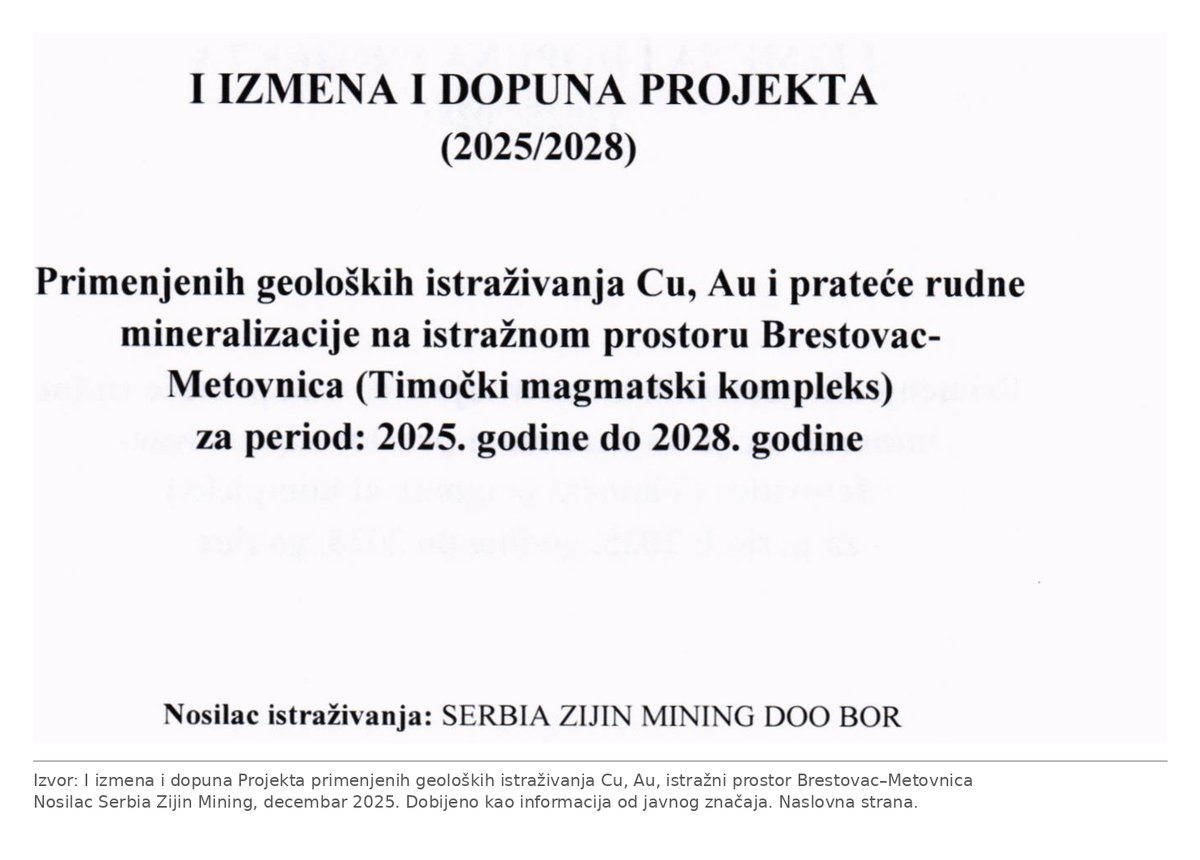
The exploration project for this area and period was amended in December 2025. The amendment was prepared by Golden Summit Engineering of Belgrade; we obtained it through a freedom of information request and publish it in full (link in the sources below). Page numbers in brackets are the numbers printed in the project.
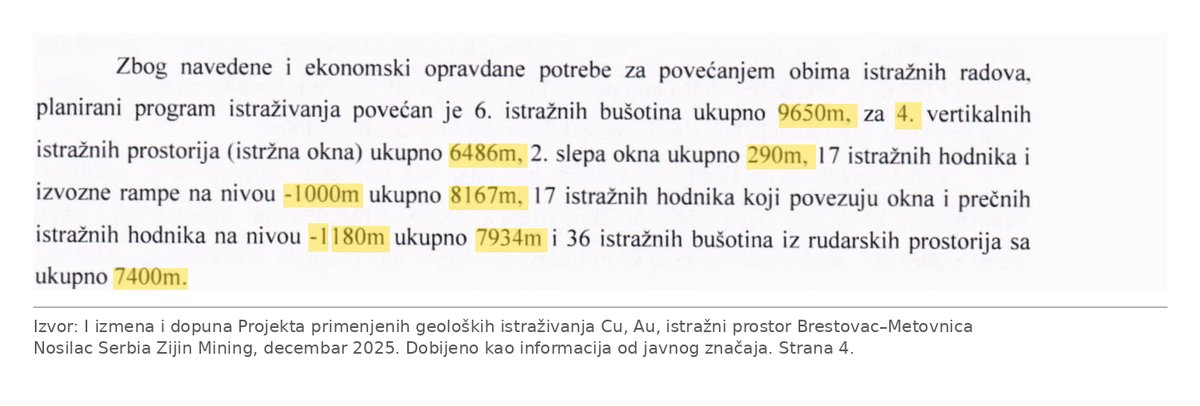
The amendment changes the nature of the works. Instead of drilling from the surface, the project now foresees (p. 4):
- 4 vertical exploration shafts with a total length of 6,486 m, and 2 blind shafts;
- 34 underground tunnels and a haulage ramp on two levels, 1,000 and 1,180 metres below sea level, which is more than a kilometre below the surface;
- almost 23 kilometres of shafts and tunnels in total, plus 36 boreholes drilled from underground and 6 new ones from the surface.
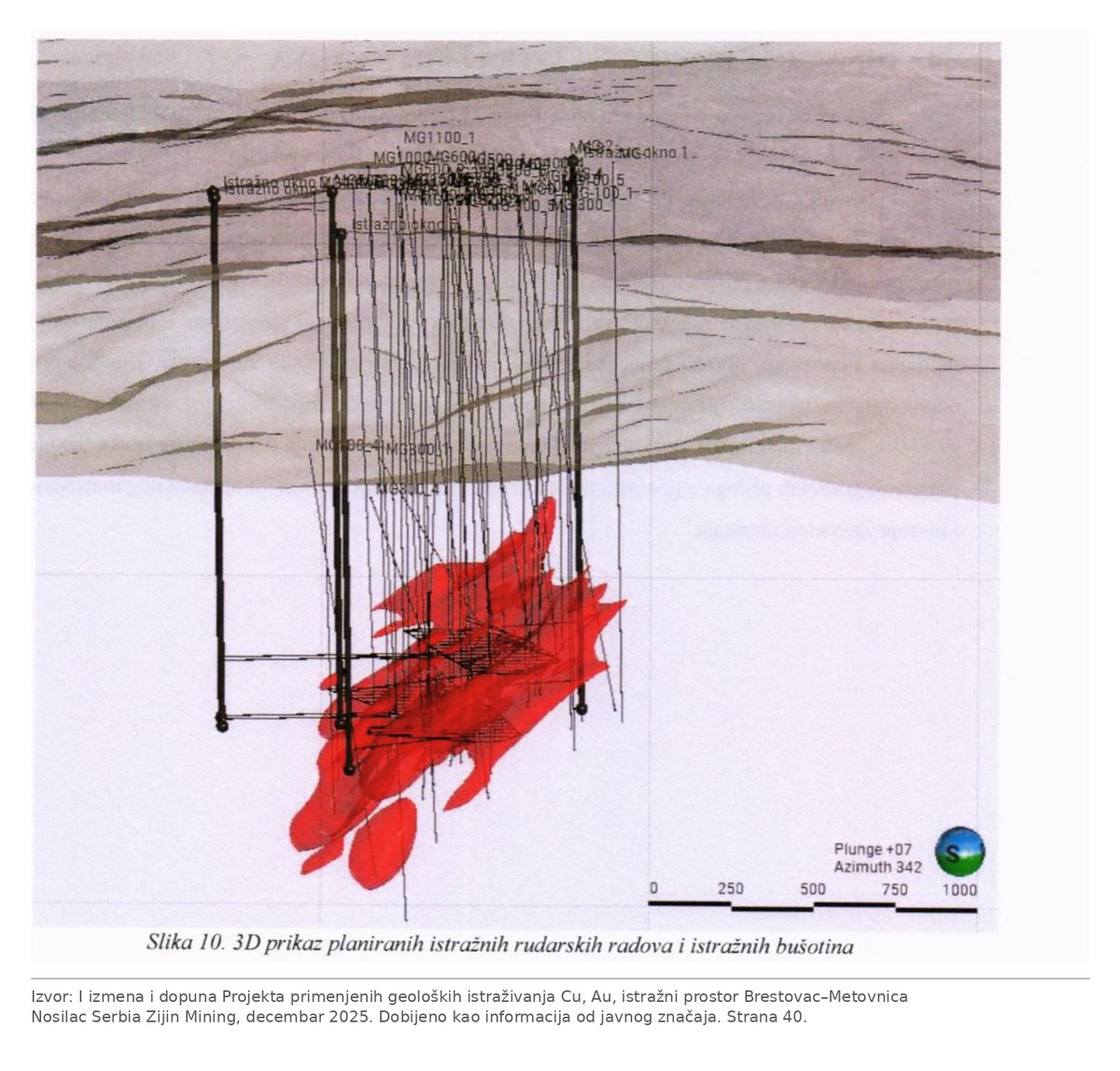
Five shafts will be worked at the same time: four in the Brestovac–Metovnica area and one in the neighbouring Brestovac–zapad area (p. 4). The locations of the four shafts in this project are on our map, near Zvezdan.
Who the digging is for
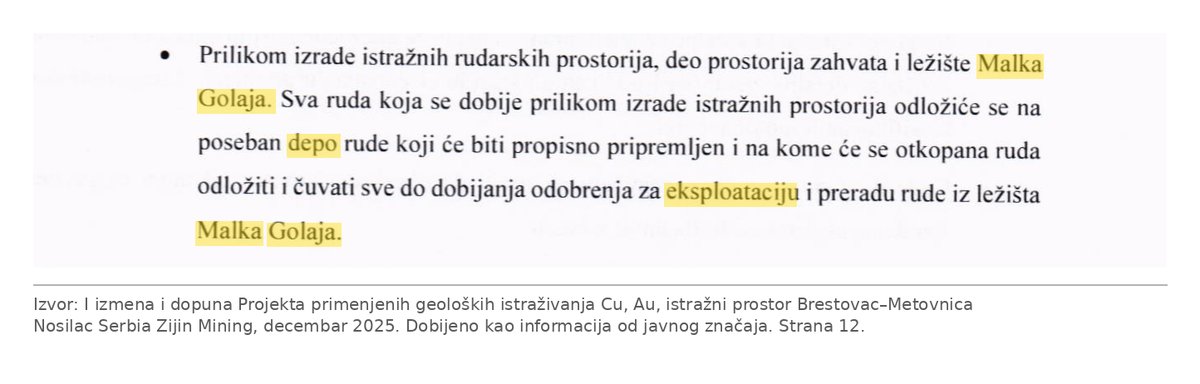
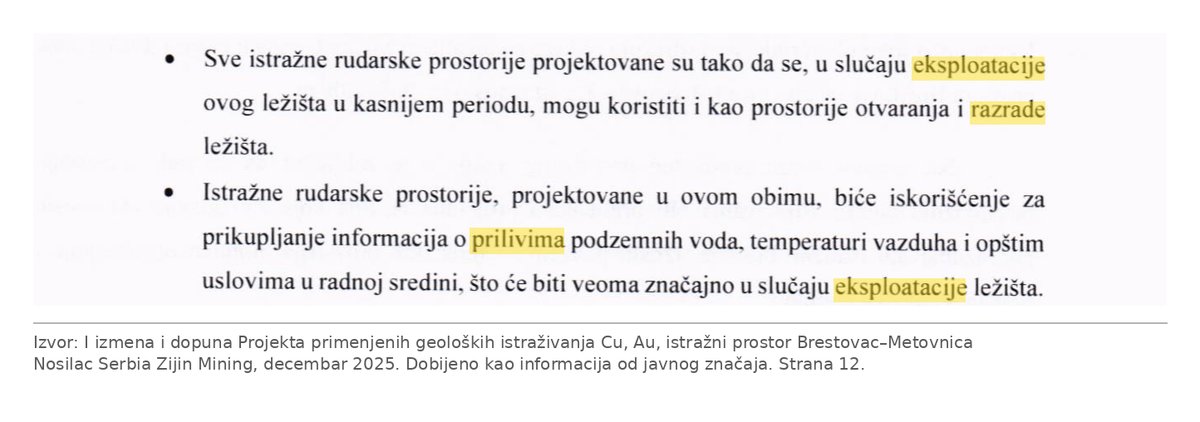
The project itself says the works target the porphyry zone of the Malka Golaja deposit (p. 7). Ore dug out while building the shafts and tunnels is kept on a separate stockpile “until approval is obtained for the exploitation and processing of ore from the Malka Golaja deposit” (p. 12). The exploration openings are designed so that, if the deposit is mined, they “can also be used as openings for the development of the deposit” (p. 12).
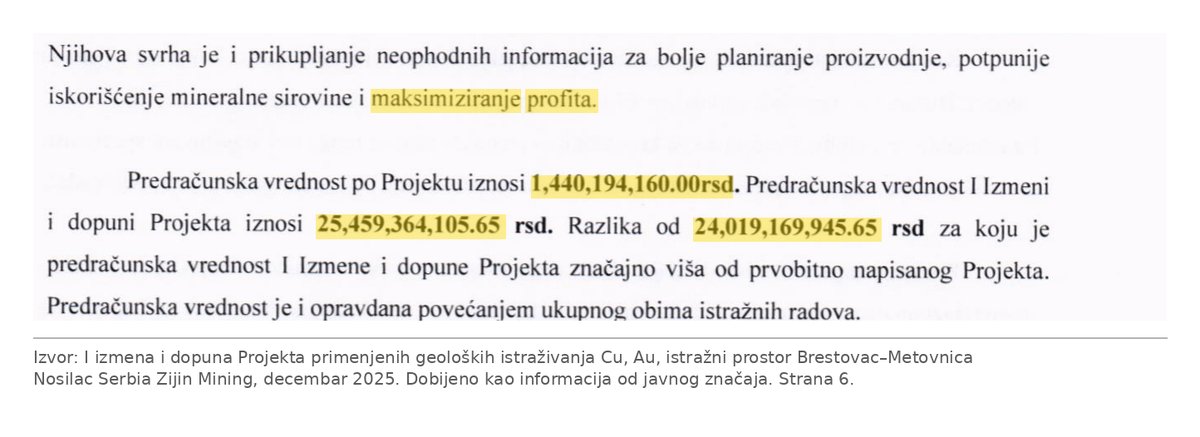
The estimated cost of the works rose from 1.44 billion dinars under the original project to 25.46 billion dinars under the amendment, almost 18 times more (p. 6). Among the purposes of the works the project also lists “maximising profit” (p. 6).
Why this matters
- This is preparation for a mine. Shafts, tunnels more than a kilometre deep and an ore stockpile prepare the mining of Malka Golaja. The Malka Golaja mine and a new smelter are part of a spatial plan that is still being drafted. If the shafts are approved without an impact assessment, part of the mine gets built before the mine as a whole is assessed.
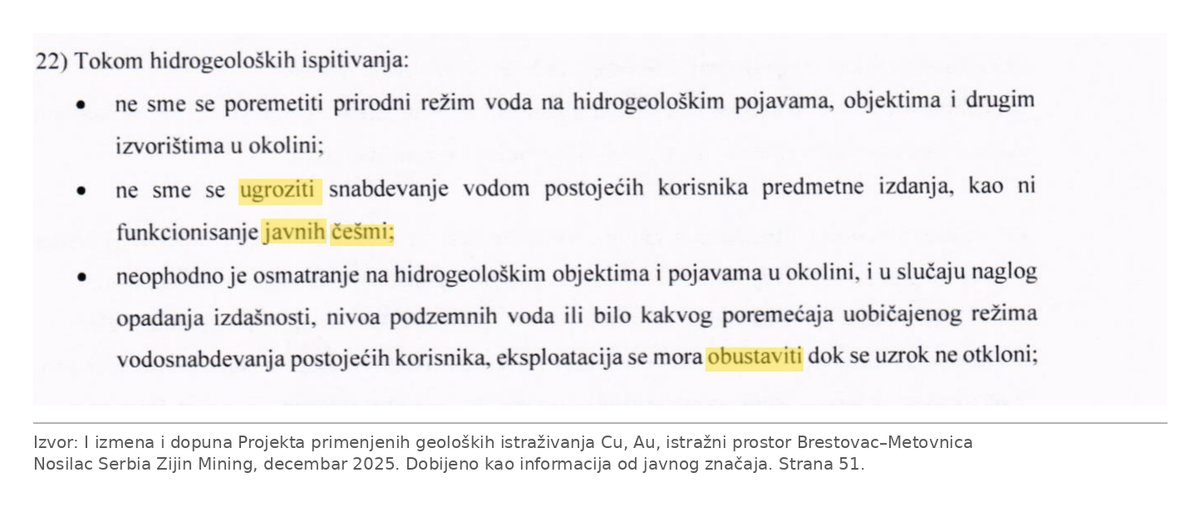
- Groundwater and public fountains. At the neighbouring Čukaru Peki deposit, according to Zijin's own request from March 2026, an inflow of about 500 m³ of water per hour halted work on shaft L4. Hydrogeologists warn of a possible impact on the thermal waters of the Nikoličevo and Gamzigrad spas, and no hydrodynamic model of the area exists. In its conditions for these works, the Institute for Nature Conservation of Serbia requires that “the water supply of existing users of the aquifer must not be endangered, nor the functioning of public fountains” (p. 51).
- Felix Romuliana and Zvezdan. The shafts are planned near Zvezdan, 6 to 7 km from Felix Romuliana, a UNESCO World Heritage site. This year 11.49 ha of forest were cleared without a permit in the Zvezdan cadastral municipality.
Follow the next steps
Do you have a tip, a photo or a document from the field? A dated, located record is evidence. Get in touch.
info@timockabuna.org